Fremde Mächte verüben Anschläge
Ich hatte eine Ausstellung in einer langen weißen Halle in Köln, die Steffi Popp gehörte. Alle Kunstwerke hatte ich dicht übereinander in einer Ecke aufgehängt, was wenig Eindruck machte. Ich konnte nichts daran ändern. Dann ist mir mein Auto gestohlen worden. Ein kleiner dicker Versicherungsmann kam mit einer schwarzen Mappe und machte unverständliche Angaben. Dazu löste sich ein Zahn im Mund, ich zog ihn heraus. Später im Bus saß ich neben einer aufgelösten Frau, die ich zu beruhigen versuchte. Ich kannte sie, weiß aber nicht, wer das gewesen sein soll. Dann am Südbahnhof im Starkregen ohne Schuhe ausgestiegen.
5.9.26 Wien
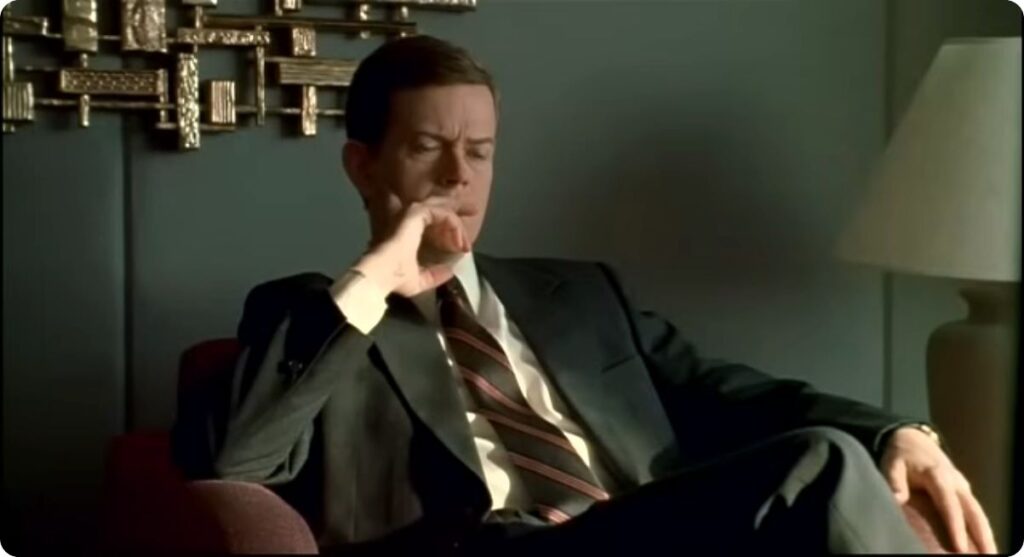
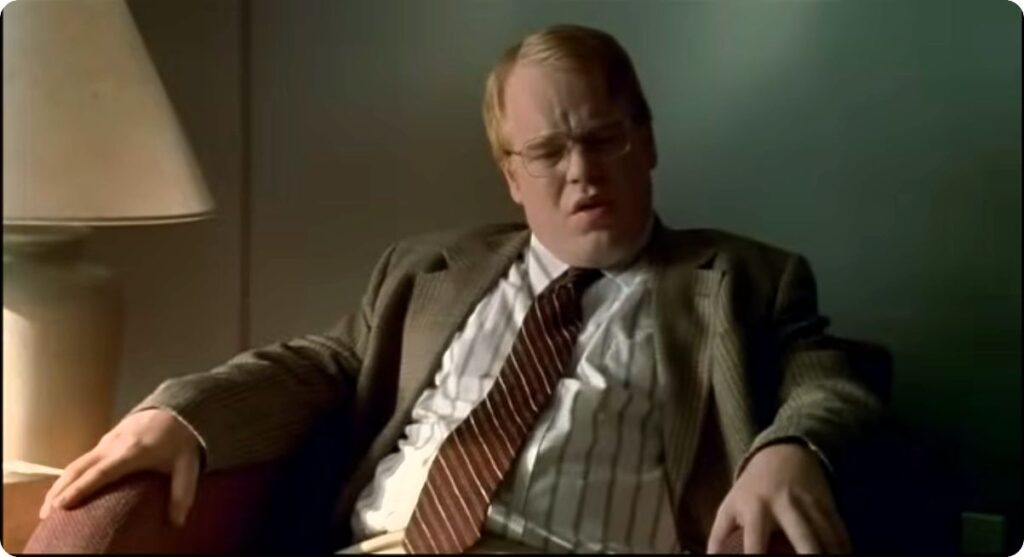
12 Eier, Wäsche aus der Reinigung holen, Zahnarzttermin verschieben, Billys Hausaufgaben kontrollieren, ich muß den Hund waschen lassen. Keilrahmen von Gerstaecker holen, Margaretenstraße 113.
Dann mit dem schweren Holz auf der Schulter zu Fuß durch die Stadt.
Ja, also erstmal ist man natürlich froh und erleichtert über eine Diagnose, um dann sofort traurig zu sein darüber, daß das 100 Jahre lang gedauert hat. Daß das niemand vorher mal erkannt hat. Jetzt einerseits vieles einen Sinn macht, aber auch leider einen traurigen Sinn.
Gleichzeitig sei klar, daß man nach vorne kucken muß und nicht beleidigt sein soll über die Vergangenheit und all die Anstrengungen und Selbstanklagen. Die immer nur zu noch mehr Anstrengungen und Selbstanklagen geführt haben.
Bei „nach vorne kucken“ wurde Doktor Maplewood wieder munter und sagte: ja, genau! Nach vorne sehen. Machen, was möglich ist. Arbeiten mit dem, was da ist. Es ist ja was da.
Am 12. September 2026 um 10:14 Uhr
Nieder mit der Erziehungskunst
https://eurogruppe.be/InterCity_Nr%203.pdf
_______________
was dem einen sein safe space
ist dem anderen ein stress place
Am 14. September 2026 um 17:31 Uhr
Harald Schmidt in Schwerin
(mit Korbinian Frenzel)
https://share.deutschlandradio.de/dlf-audiothek-audio-teilen.html?audio_id=dira_90DCB6F8B03011F17D5A48DF3755BF60
_________________
wenn sonst nichts geht: Quellenstudium geht immer
https://zadik.phil-fak.uni-koeln.de/
Am 15. September 2026 um 12:11 Uhr
heavy Gelehrten-Kunsthistorik
versuchen wir mal reinzukommen
What Is Quality?
Responding to “After the Post-Avant-Garde”
The Point
Sept. 13, 2026
https://substack.com/inbox/post/215098989
Taste Isn’t a Bad Word
“After the Post-Avant-Garde” Roundtable: A response to James Elkins
The Point and The Manhattan Art Review
Sep 14, 2026
https://thepointmag.substack.com/p/taste-isnt-a-bad-word
Judgment is simply inextricable from experience, in food as in art, and I fail to see what’s gained by denying that. (…) From my point of view, it’s more productive to exercise one’s discernment while accepting that your judgments are limited and contingent than it is to demur from the practice altogether.
(…)
Perhaps what Elkins aims to forswear by insisting upon historical contingency is the possibility of claims to objectivity, and again I agree. But, as someone of a post-postmodern generation, I can’t help but see the suspension of judgment as a capitulation to a relativism that’s at the root of all our unmoored millennial ennui. The simple reconciliation is that while art may be wholly subjective, subjectivity itself is wholly qualitative. That is what criticism should be grounded in, a subjective judgment of the subjective content of art that reflects the subjectivity of the artist. This is an old concept of criticism, as Schlegel was already arguing in 1798: “Many of the very best novels are compendia, encyclopedias of the whole spiritual life of a brilliant individual.”
This seems to me to be an obvious fact of any major work of art, excepting that in our day and age we’re liable to choke on the phrase “the whole spiritual life of a brilliant individual.” Nor am I suggesting that we should force it back into use. Nevertheless, it seems to me that Schlegel’s observation is true. In less grandiose terms, I was drawn to the arts as a depressed teenager because I had the impression that coming to understand art and artists would eventually, somehow, take me out of my depression. And eventually it did. As Marguerite Duras puts it in “I Thought Often…,” “There is no happiness other than that of intelligence. I think people like Rousseau, Montaigne, Diderot all attained it.” That line has stuck in my mind for years because it translates Schlegel’s sentiment into one we, or at least I, can stomach in the 21st century.
Another, likely better word for singularity could be artistic autonomy, in Adorno’s sense of the term. Autonomy is always wrested from and therefore dependent on the historical contingencies that inform the scope of artistic possibility. Or the contemporary, in Agamben’s “What Is the Contemporary?”: “Contemporariness is, then, a singular relationship with one’s own time, which adheres to it and, at the same time, keeps a distance from it.” This is the dialectical creation of the subject. In other words, it is only from our engagement with the history of art that we can become familiar, over time, with what a great work of art is like, which is to say the canon mediates our subjectivity at the same time that we subjectively mediate the canon. Taste generally, or perhaps always, develops in relation to some social context that informs one’s sense of art. Only chance and long exposure lead to one’s subjective ability to meaningfully judge art, which is to say that one internalizes a sense of judgment, received from outside through art, which is thus not particularly subjective in any meaningful sense. Neither is it objective, because these judgments, being historically contingent, are always being mediated by the limitations of the subject, by social context, by historical vantage and so on. What matters for criticism is not the objectivity of quality but whether or not the critic can discern quality for themselves in a way that is useful for others. Criticism and judgment are always communicative, incomplete pursuits.